
Pleased to Meet You, Dr. Jan Øberg
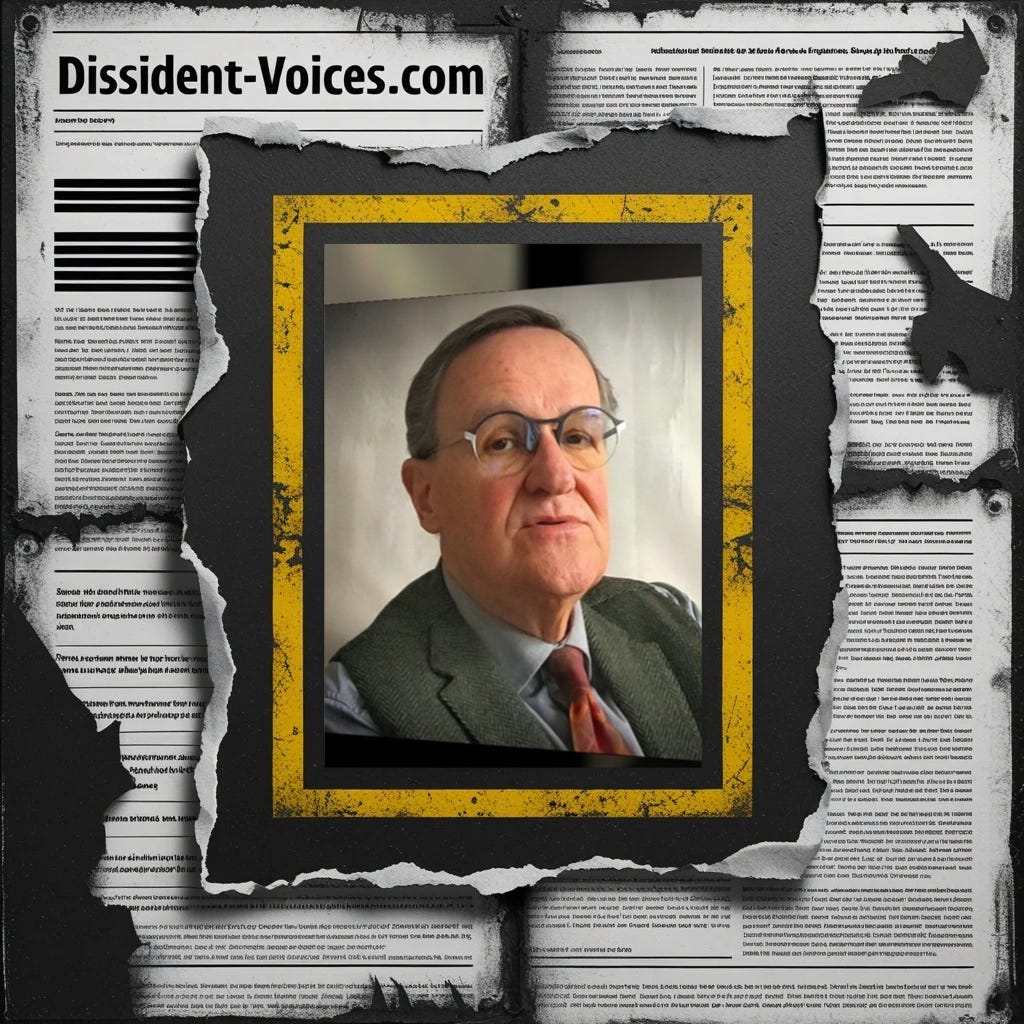
Dr. Jan Øberg is a prominent peace researcher, author, art photographer, and co-founder of the Transnational Foundation for Peace and Future Research (TFF) based in Lund, Sweden. Educated in sociology and peace research, he has spent over four decades directly analyzing international conflicts on the ground—from the former Yugoslavia and Iraq to Iran and China—while challenging institutional militarism, NATO expansion, and mainstream media collusion.
Following the degradation of global diplomacy into groupthink, Jan established TFF to champion independent scholarship, historical depth, and non-violent conflict resolution. Throughout his distinguished career, he has extensively researched the military-industrial-media-academic complex, the dangers of nuclear strategy, and the structural suppression of peace initiatives.
His work also explores China’s historical rise, the collapse of Western commentary culture, and the vital necessity of creative, non-violent diplomacy rooted in universal human rights.
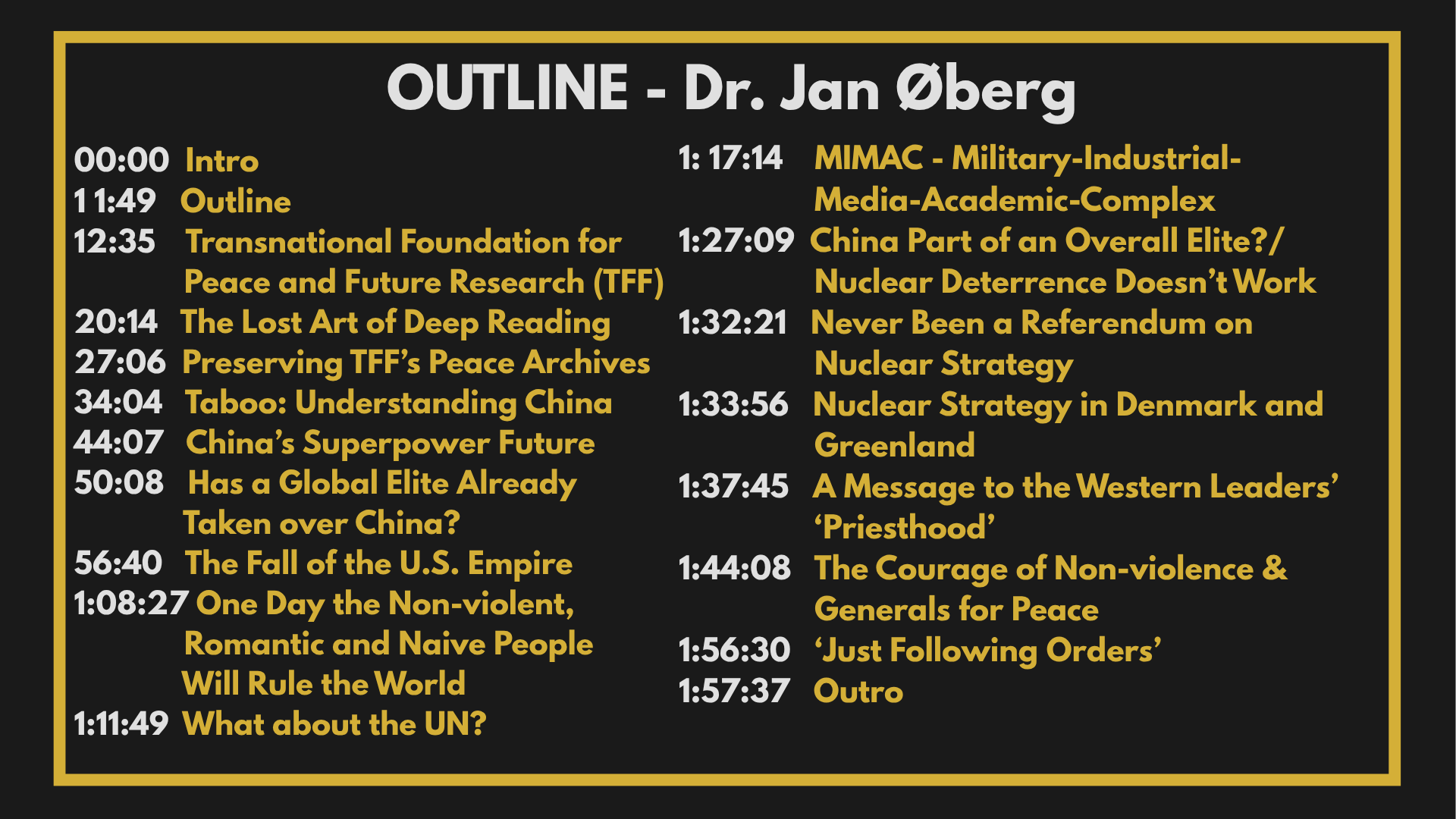
Interview Outline & Timestamps:
Further below, you can find Dr. Jan Øberg’s own written answers to our standard ‘Getting to Know the Dissident Voices’ questionnaire. Combined with the video interview, you now have extensive insights into exactly who Jan Øberg is and what his research and activism represents.
Remember, if you want the opportunity to ask our guests a question yourself—perhaps even directly face-to-face—here is your chance: Upgrade to a paid subscription today.
As a paid subscriber you will be invited to all the upcoming Dissident Crossfire live recordings, where 3-5 of our recent guests will appear.
Dissident Crossfire
On September 20th, the first Dissident Crossfire session featured five previous guests for an exclusive, unscripted live debate. See below.

On November 1st, the second Dissident Crossfire featured three climate savvy guests: Dr. Ursula Edgington, Dr. Jacob Nordangård and Rypke Zeilmaker. See below.

Jan Øberg will feature in a future Dissident Crossfire—and you can participate in the live recording.
By upgrading to a paid subscription on our Substack today, you unlock full access to our premium, monthly Dissident Crossfire sessions, including live text chat during the broadcast and the right to submit your topics directly into the debate. If you join as a Founding Panel Member, you secure a permanent seat backstage with live speaking rights to challenge the panel face-to-face.
Click the button below to sign up today.
No funds? - You can still join!
If you aren’t able to upgrade to a paid subscription, you can simply refer your friends and obtain 1, 3 or 6 months of free access to paid features. It’s easy! -Just refer a friend by hitting the below button:
(read more about the referral program HERE!)
QUESTIONNAIRE: Getting to Know
Dr. Jan Øberg
🎬 Intro & Background
What is your name, where are you from, and where in the world are you currently based?
Jan Oberg, Denmark, since 1972 based in Lund, Sweden.
What is your professional background, and what occupies most of your time today?
See above, peace research & writing about peace by peaceful means + art photography and sometimes documentary, both as peace- and dialogue promotion.
🤐 Taboo of the Week
What is a mainstream media topic, or an overlooked story, that you believe we are not allowed to discuss honestly—and why does it deserve our focus today?
The driving forces of the present rampant militarism (negative peace) and all the alternatives (positive peace) that are expressed by Gandhi and in Article 1 of the UN Charter, namely that peace shall be brought about by peaceful means and that violence must only be used as the last resort and under the leadership and command of the UN. (All countries have signed up to that).
🧭 Becoming a Dissident
When and how did you transition into becoming an outspoken voice within the alternative media landscape?
I did not transition anywhere but have been committed to peace by peaceful means and international law for over 50 years. However, the West transitioned away from peace, informed security, confidence-building measures, disarmament talks, arms control, and the Nordic countries decided to transition away from the classical low-tension Nordic balance and, instead, enrolled with NATO's offensive deterrence, destabilising philosophy and politics.
I believe my work over many years in Yugoslavia and during the dissolution wars there, I began to get a sense of how narratives were constructed and those of us on the ground stopped being able to recognise that what was written about them (and their causes) back home in the media had little to do with the complex realities there on the ground.
I assume that you can add that 9/11 consolidated the role of the Military-Industrial-Media-Academic Complex, MIMAC as I have re-coined Eisenhower's term); the Global War On Terror, GWOT, was so primitive that it had to be promoted by narratives, self-righteous propaganda and outright lies (such as Saddam having nuclear weapons).
I am not sure of the degree to which I am part of an alternative media landscape - or what that is. I am excluded by mainstream Western media, yes, but I do participate in a few smaller alternatives there and in mainstream media outside the West, among them some of the largest media in China. The messages of peace are appreciated worldwide, not just among the 12 of humanity that makes up the West.
Was there a specific catalyst or an exact moment you realized you could no longer subscribe to the mainstream narrative?
Having been engaged one way or the other in a series of major conflicts and wars since the end of the First Cold War, I think it came gradually. You know, you begin by thinking that this or that phenomenon is a one/only-timer and then you detect over time that it has become a system characteristic, not an exception. The lies about Iraq was one; the law- and UN-violating bombing of Serbia another. And the totally unnecessary and promise-breaking expansion of NATO and then the NATO reaction to Russia's (understandable but international law-breaking) invasion of Ukraine solidified my hypothesis that the decline and fall of the West in a macro-historical perspective would accelerate with the transition from some kind of reasonable democracy and public debate into kakistocracy and an Orwellian clamping down on dissident voices and alternatives - which is what declining and ever-weaker systems do not have the strength to accept. The West has become weak and intolerant of diversity.
How did stepping outside the consensus impact your professional career and daily life?
Not much. After I left Lund University (because the social science faculty stupidly closed down all inter-disciplinary studies, including peace research), I have always been a free public intellectual speaking my mind. TFF is entirely people-financed and all-volunteer and, as a principle, does not accept any government or corporate money. If we had relied on government funds, we would either not have existed today or been forced into international relations and security studies like virtually all peace research outfits have. We have, so far, been able to create and develop true peace research - a science which is aimed at reducing all kinds of violence and devise strategies towards more peaceful futures (much like medicine is about reducing diseases and creating positive health).
How has your work affected your personal relationships with family, friends, and former colleagues?
Not at all with family and true friends. Some others have not understood or accepted that I make the analyses I do of, say, Yugoslavia, Iraq, Iran, China, Syria or of the NATO-Russia conflict that plays out in Ukraine. I do not blame them, since they are often informed only by the mainstream and public service media.
Did other independent thinkers or dissidents guide you on your journey? If so, who stood out to you?
In gratitude, I have made memorial sites for them:
Aage Bertelsen, my headmaster at Aarhus Cathedral School who was Denmark’s leading pacifist back in the 1950s and 1960s
Aage Bertelsen (1901 – 1980) – Danish educator for peace - The TransnationalHåkan Wiberg, leader of LUPRI before me and the person whose courses convinced me to become a globally-oriented sociologist/peace researcher
Håkan Wiberg 1942 – 2010 – Peace researcher, philosopher, sociologist, mathematician …Johan Galtung, one of the founders of the academic discipline of peace and conflict studies and the first peace research institute, PRIO, in Oslo - and founding much else, too.
Johan Galtung 1930-2024 – A memorial for the world renowned peace and future researcherAs I write in my non-memoires called “WorldMooires,” there were many others - including in philosophy and music, art and photography - but you ask for those who stood out and, I assume, you mean within the field of peace research.
But more in Chapter 2 of: “Goodbye Peace. Worldmoires Into A Peaceful Future” 🔸 Jan Oberg’s online book begun in 2021
What is something about your journey into dissent that none of us know?
As I said, I did not deviate or change basic values and orientation, but the West did - fundamentally. So I don't think I journeyed anywhere in that sense, but the West declined intellectually, value-wise and morally. Those who have followed my constant writings, particularly online (I do not believe in academic books in print) and social media or have attended public or university lectures know where I stand and I have no things to reveal that they would not already know or have guessed.
🛠️ Dissident Activities & Behind the Scenes
Could you describe what a typical workday looks like for you?
Unless travelling, I seldom get started at my desk before 9AM but normally work until 2AM or so. I work 6-7 hours with international stuff and peace, write, post, check news, answer mails, do media work or whatever peace-related (my wife and I do all administrative work and publishing in TFF, no employed, no assistant). In between or after that, perhaps an hour or two in the garden, practical work in or on our house, whatever needs to be done. Then the evening after dinner, my photographics work - creating, printing posting and maintaining homepages, social media etc.
Including Sundays, that makes a work week of about 75 hours - necessary because I live two lives, but "work" means something I like to do. If I didn't enjoy my peace research and photographics work, I would do something else. I don't believe in sacrificing oneself.
I have no scheduled life, as freelance I can take a Wednesday if I want or need to, have reduced meetings and 'entertainment' to a minimum, have no TV. Some would say I work all the time but I do get time for family and enjoying life with my dear wife over 43 years too.
It does imply some discipline, yes, and at 75 I work more than most my age, and will never live a pensioneer life. I am purpose-driven in the fields of peace and art. And hope my health will carry me to at least 100, life being so interesting and my mind so full of projects. And licing two lives is actually already a bonus. All this is dependent on good health, and I am extremely lucky so far.
What is your methodology when it comes to research? How do you separate signal from noise?
Depends on what is meant by 'noise.' I used to say that it has its advantages to get a bit older and knowing things on the basis of 50 years of practical, empirical and theoretical experience. I am not distracted or fooled by the 'noise' a politician tries to make us believe or a more or less fake story in the media.
As for research methodology, it's the same as before - but it does not take me as long to arrive at a conclusion as it did when I was 25 or 40. I stick to the simply but immensely important research strategy that Galtung taught me, namely that research is to do Diagnosis + Prognoses + Treatment/Solutions. You have not come to the end of any research before you can say something about how the problems and/or dangers you have described can be avoided /solved.
And that is where where about 90% of social scientists and security scholars and geopolitical pundits flocking today's YouTube fail miserably: they have no ideas about possible solutions, not even thought they ought to have something to say about them. To leave the solutions to official decisionmakers likely means catastrophe in the fields of security and peacemaking. Like I have no respect for a doctor who only offers the patient endless descriptions of how the cancer cells have begun to grow and how they spread but has nothing to say when the patient asks: But doctor, what can be done to save my life?
Let me add that politicians do not bother about criticism; but they do bother and get very annoyed when someone comes up with better ideas than their own (which is pretty easy) and make citizens wake up and say: Why the heck did I never think of that myself?
THAT is why all decisionmakers loathe alternatives, call them unrealistic or naive or tell that the alternativist is a conspiracy theorist, Putin lover, or what not: They have no good ideas themselves. If they had, they would say: Oh your idea is interesting, and since we live in a democracy, let's discuss and see who has the best arguments and what way to move foreward.
Do you invest significantly in subscriptions or support for other independent creators?
I share, on a daily basis, things I consider of high relevance and high quality. Have always done. I am one of those (too few) academics who do not only announce my own new article or video but highlight also what others do - and not only our 50 TFF Associates around the world but also people with no relationship to our foundation. It gives me joy and keeps me going that there is so much good stuff available and, since it doesn't feature in the mainstream research or media, I like helping it out into the world.
I do subscribe to a few publications online and buy books - if by "investment" you mean money-wise - but my main investment is time and energy in sharing what other peace-relevant people do.
What are the hidden costs of running an independent media platform that the audience might not see?
TFF is not a media platform and we do not produce news or engage with the news world unless it comes to us. We are a research institution, a peace think tank, doing research and public education relevant to it.
When we started out 40 years ago, everything was on printed papers and we sent our printed newsletter by mail once a month to 1200 recipients. Today, we reach about 50 000 per day through a diversity of channels and only online, no paper products. Our brand new homepage at The Transnational - For peace by peaceful means contains 9000+ articles and videos produced over those 40 years, absolutely unique for a shoestring operation such as ours. So, whatever audience that might not see what we do is up to them, everything is freely available and, as a policy, will always be because we serve people, and it is people who support us. I want every student anywhere in the world, particularly poorer ones to be able to learn about peace, and I find academic publishing houses who charge 40 Euros for access to an article a perverse practise. Academic work should be publicly available, also for the sake of open debate; furthermore, it is the taxpayers who have paid for our education, universities, etc.
To what extent do you utilize AI in your workflow, and do you rely on premium AI tools?
AI is a handy way to quickly get access to comprehensive research-based information, particularly when the sources it builds on are indicated and you can check them yourself - because that you must. AI makes mistakes. I also use AI in the process of generating good ideas. I once asked this question to it: How would you make peace in Ukraine? And in 10 seconds I got all the things I would have suggested as a peace research and not one idea like: We must arms ourselves and through Ukraine win over Russia and then there will be peace. Not once has AI confirmed to me that war is the road to true peace. If you ask it will give you intelligent answers to why that is so. So, I am tilting towards the attitude that it can be helpful in furthering peace dialogues in a way research, media and politics can not - or that it is superior in these fields to HI, Human Intelligence. That applies to an epoch of militarism; should HI be employed in a decent civilian society, what I just said would change.
I also use AI for quick searches of single facts - never Google, because Google is a terrible company in numerous ways.
And finally, I use AI for translation. I write everything in English, but I also want to serve those in my native Denmark who find social science English difficult.
More on my personal blog at 🗝 Jan Oberg – Life • Peace • Art which is mainly in Danish and/or Swedish.
Having said all this, I am not ignorant of all the dangers that AI also carries with it, not the least when it is used in warfare. However, HI is no guarantee. There have been many accidents and risks with nuclear weapons and their command, so HI is not necessarily safer.
Most new technologies have good/constructive sides and bad/dangerous sides. It is a matter of human intelligence, ethics, social education and common sense how we use them. In my view, everything that can help people learn more, be curious and understand complex issues is worth trying and applying - carefully. You could say the same when the car came - and about the mobile phone, about digitalised imagemaking, etc. But you can not say so about nuclear weapons; they are, if you will, 100% evil.
Who are your own favorite dissidents or alternative media channels right now?
Over time I have come to avoid all the military-oriented geopolitical punditry channels (all produced by men, btw). Their focus is on warfare and everything around it, yesterday, today and tomorrow - no macro, no theory or conceptual innovation, no visions and no resolutions. But people seem to love that kind of ongoing “commentarism” which, I should add, contributes to make war stand central/natural in people’s consciousness. Everytime we focus only on wars and other violence, we kill time that could have beendevoted to creative peace thinking and alternatives.
I follow no channels systematically. I get notes from a lot and watch here and there. I like Pascal Lottaz’s “Neutrality Studies,” because neutrality is such an important concept for peace.
You ask about channels. Let me tell you that I got educated by reading books - the long, complex argument and explanation about the de facto complex world. Images are fine, I am not a photographer for nothing... but I can skim a video text much faster than it takes to watch a person say that text. Furthermore, by reading a text, I don’t get distracted by that person’s appearance, way of speaking, background or whatever. While I do both, I want to emphasise that reading is key to a deeper understanding, and woefully little substantial and long reading is done these days; that is an important reason our society is falling apart and people neither detect fake or propaganda, not to mention what they a deliberately prevented from seeing and hearing, the omitted news, perspectives, experts, etc
I do less book reading than I would like to - and then it is often in the fields of culture. A book that just now when I write this absorbs me is Patrick Curry’s “Art And Enchantment. How Wonder Works.” Without ignoring in the slightest the terrible development around the world, we can’t do without enchantment from cultural creativity, hope, vision and good ideas.
What is the best-kept secret about your day-to-day dissident activities?
That I have none. It is not a secret, on the contrary, but most people do not know that I do art photography, see Oberg PhotoGraphics - Oberg PhotoGraphics.
What exciting projects or content do you currently have in the pipeline for your audience?
Completing the new TFF homepage with PDFs of books and other writings from before the internet. We launched our first homepage in 1997, so 11 years of production went on print, not online. We want this to be a historical peace research/education archive, and it will be there way after we are no longer here.
Secondly, to remain a student with curiosity. My main focus is China, going there once or twice a year, interact with intellectuals, media, the art world and people everywhere you can - and you easily can - write about it and do art and documentary photography. This is also to keep balance in my own life, because China has done something unique in human history, and its amazing achievements since I was there for the first time in 1983 gives me hope. To not be not interested in understanding China from exactly that point of view - including its deeper way of thinking and developing strategies - is inexcusable at least for somebody like me.
🔮 Looking to the Future
What is the ultimate impact or goal you are trying to achieve through your work?
An understanding of the necessity of coming down from the tree and find out that intelligent conflict resolution and peace is infinitely better than wars and other violence. I mean, imagine a world in which there was not 600+ US military bases, no waste on armament (or 1% of today's), fewer or no wars, a UN (that would get more than 1% of today's military expenditures for all it does), a world in which we spend human and other resources to cooperate more and more about creating a better world for all, a world guided by a global ethics and one in which, when we run into unavoidable conflict, the last tools that would be employed would be the violent ones. What a wonderful world...and visions about it is what the militarist kakistocrats hate more than anything else...And, yes, I believe it is eminently possible, a eutopia and not a utopia. But all this nonsense about human evil - and we being good and them being evil - is, well, an evil. I apply evil to systems and certain systems must go because they are evil.
Based on both your physical location and ideological perspective, what are the most likely local or global scenarios you see playing out in the near future?
That is the ongoing decline and fall of the US-dominated Empire, including NATO and the EU. That stands in the way for virtually all improvements in humanity’s situation and for solutions to the global problems we must solve - and which can only be solved if we cooperate. That is will happen is crystal clear; the only question is how fast and whether it will end with a bang or a whimper.
And, let me add, there will be no new empires. China and others do not have missionary culture, do not want to force people to be like them or emulate their system; they want to be special. Empires and seeking to make all the world follow one set of values - ours - is an extraordinarily stupid idea - Doris Lessing’s Shikasta...No, the future will be Unity in Diversity - not Western Uniformity - at the lowest possible level of accepted violence. And coutries will be replaced by people, regions and world order - UN-like - thinking. A transnational world...
What is one conviction you hold to be profoundly true that the vast majority of society would strongly disagree with?
Haha - like "When did you stop beating your spouse"? I hold it profoundly true that peace and non-violence is more intelligent, benign and productive - but also requires ethics and education which violence doesn't - and the vast majority of humanity would agree to that.
You'd be surprised if you knew how few people, numerically speaking, populate the elites of the MIMACs worldwide. For instance, less than 1000 individuals run the nuclear weapons world...
💡 Closing Recommendations
If you had a direct line to those currently holding the levers of power, what would your message to them be?
Well, they all mistakenly believe they sacrifice for some larger good, so I would tell them: Come down from the cross, we need the wood. You have had your try and you failed in the highest exam of all: The creation of peace, justice, trust and conviviality. That huge failure come together in NATO which is now little but a kind of church with a priesthood, congregation, followers and missionary zeal.
What is your final piece of advice or recommendation for the audience watching/reading this interview?
First, let me paraphrase George Bernard Shaw like I have all my life and with which I end every public speech: “Most people look at the world as it is and ask: Why? What we should do instead it to look at the world as it could be and ask: Why not?”
And then my own “slogan:” Gandhi argued that the coward should take to violence because nonviolence requires a lot of courage. I would add that the intellectually lazy fellow chooses violence because non/less-violent options require more courage, knowledge, vision and ethics. Any idiot can start a fight but any idiot can not stop it and make peace.”
How can the audience follow and support your work, and which platforms or links should they visit?
How to find, follow and support
Dr. Jan Øberg
They and my background are all here in my mini personal online business card divided into myself, TFF, Oberg PhotoGraphics and my worldmoires:
janoberg.taplink.ws
TFF – The Transnational Foundation for Peace & Future Research, website:
https://transnational.live/
Next Guest Announcement!
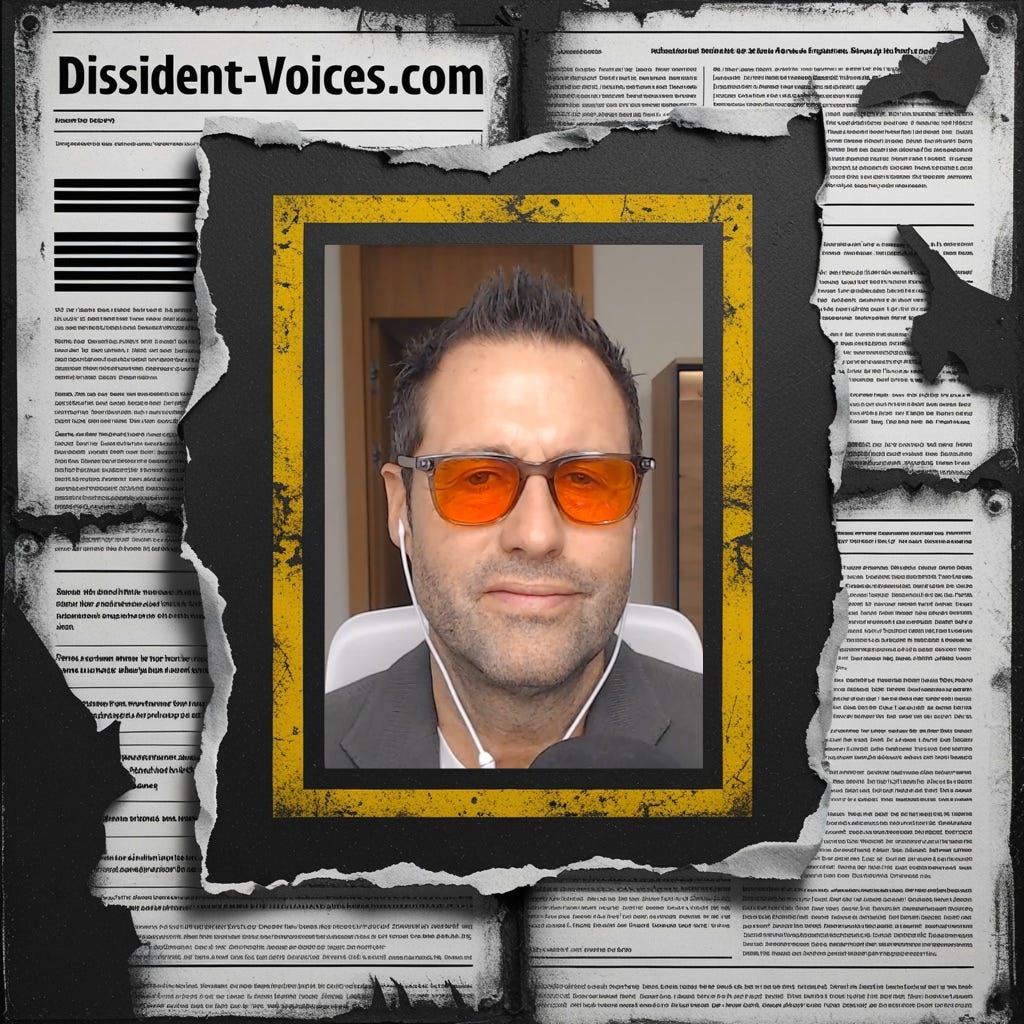
Jason Christoff
Jason Christoff is a specialized mind control researcher and the producer of the documentary PLANET MIND CONTROL. He has testified on COVID psychological manipulation at the US Senate, the European Parliament, and parliaments in Romania and Japan. His upcoming 2027 documentary will further explore the extensive mind control mechanics behind the COVID-19 psychological operation.
Subscribe now
Don’t forget to subscribe to get our Dissident-Voices interviews and the free preview of the Dissident Crossfire debates delivered straight to your inbox every Sunday.
Wanna join the frontline?
- Claim your permanent backstage pass:
Unlock Your Premium Benefits:
Monthly Access to Dissident Crossfire – Secure your guaranteed seat every single month to watch our exclusive, unscripted live panel debate featuring 3–5 world-renowned independent voices.
Shape the Editorial Agenda – Propose your own critical questions and taboos directly to the panel and dictate what the experts must answer.
Live Backstage Speaking Rights – Secure an exclusive opportunity as a Founding Member to challenge the dissidents face-to-face during the broadcast.
Fund the Independent Frontline – Keep our research free from corporate sponsorship, shadow-banning, and state censorship.
Sign up now as a paid subscriber so that you can watch the full Dissident Crossfire monthly sessions.
No funds? - You can still join!
If you aren’t able to upgrade to a paid subscription, you can simply refer your friends and obtain 1, 3 or 6 months of free access to paid features.
It’s easy! -Just refer a friend by hitting the below button:
(read more about the referral program HERE!)
Your help is appreciated!
It is nearly an impossible task to break the algorithms and censorship when launching a new dissident media like Dissident-Voices.
You can help the path to success for this new platform:
Help us break out of the algorithmic prison!

Please share this post (either in Substack or to other social media platforms):
Or leave a comment in the Substack comment section:
Or Join the Dissident-Voices chat:
If you have any inquiries or want to suggest questions to the guests on our Dissident Crossfire shows, please message Flemming Blicher by tapping the button below:


